
.png?width=1600&height=800&name=einfache_leichte_sprache%20(1).png)
Practice & Business
Accessibility Law
%20(1).png?width=1200&height=600&name=pflicht%20(4)%20(1).png)

Digital accessibility is not a nice-to-have, but a legal requirement - especially for websites of public bodies, online stores or companies that offer content online. Since June 28, 2025, the German BFSG law has required that all accessibility barriers be removed. Operators must meet specific requirements - both technically and in terms of content.
With easyMonitoring from SiteCockpit, you can test these requirements automatically, detect violations and monitor implementation on an ongoing basis.
Accessibility affects people with different disabilities - such as blind and visually impaired users who rely on screen readers and keyboard navigation. But people with motor or cognitive impairments also benefit when content in text and image form is clearly structured and accessible. The aim is to design websites for as many people as possible in such a way that there are no barriers to use.
For each point where barriers exist, the system provides specific recommendations for implementation - including suitable examples for remedying them.
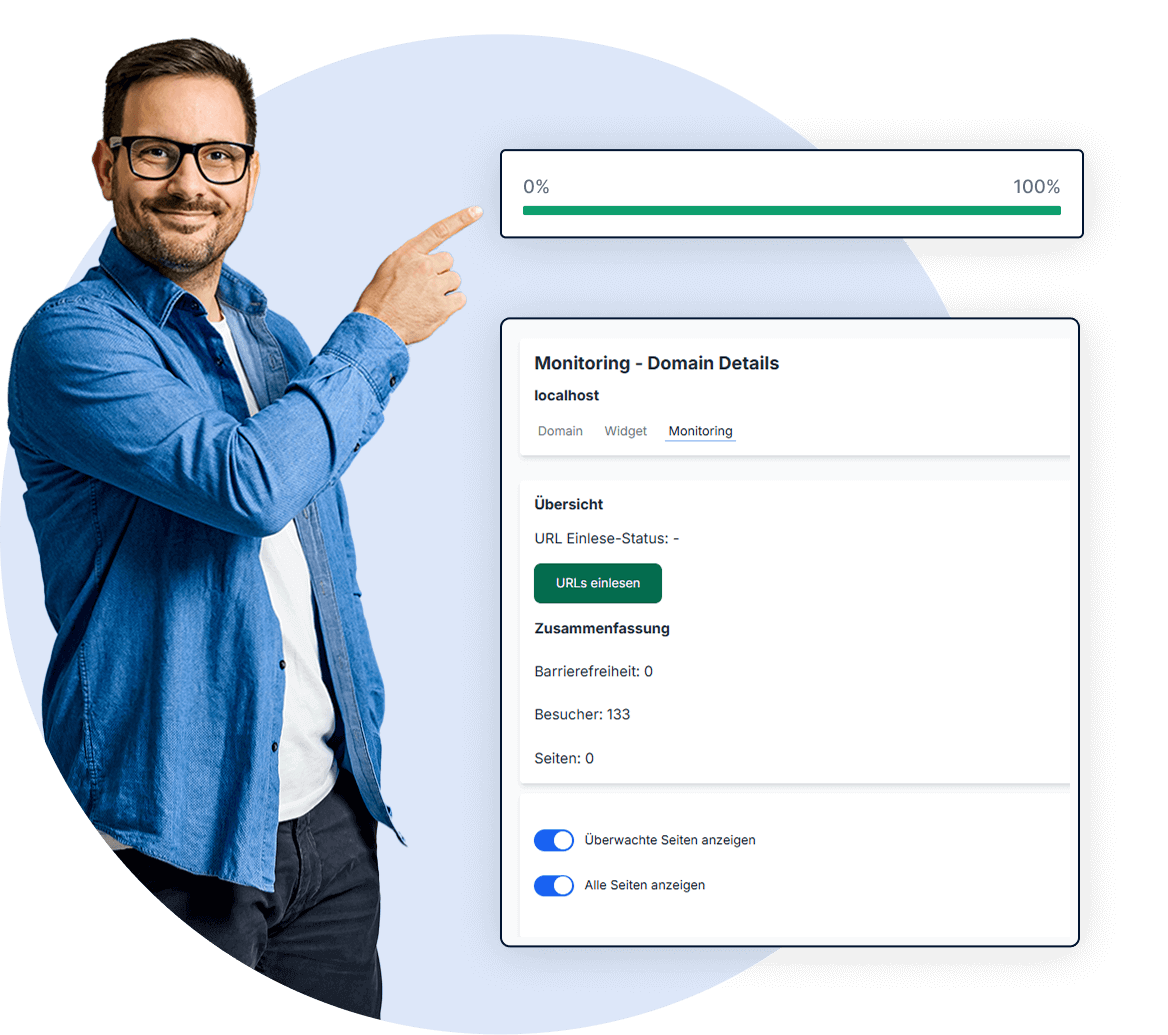
Scan & test: The automatic check records all technical requirements for accessible pages - including texts, contrasts, keyboard operability, ARIA labels, forms and responsiveness.
Report & history: Monitoring creates score values, traffic light systems and PDF reports for internal purposes or evidence under the law.
Designing content correctly: In addition to technical aspects, the content side is also crucial - well-structured texts, simple language, clear images, appropriate elements. For this purpose, easyMonitoring also shows all the necessary manual checks.
Permanent monitoring: Accessibility must be checked continuously. New content can create new hurdles. easyMonitoring enables regular scans and continuous monitoring - accessible, comprehensible, legally compliant.
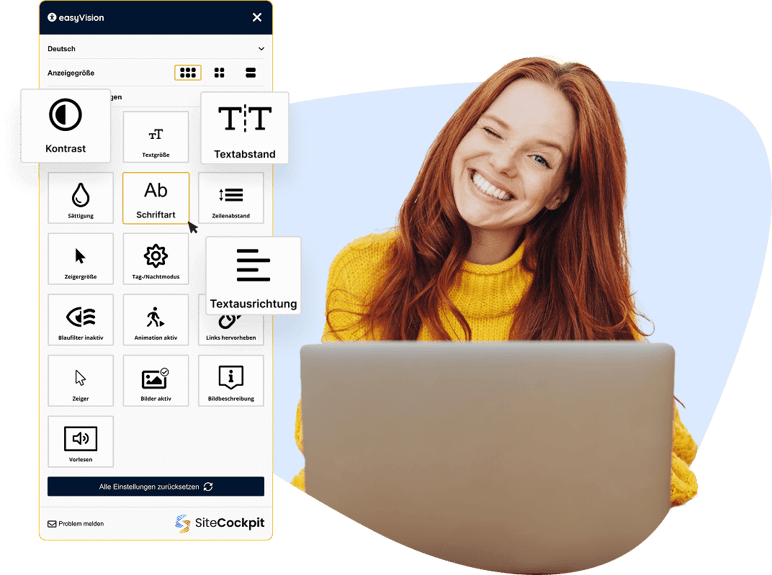
The area of digital accessibility is becoming increasingly important - especially in the public sector, e-commerce and educational institutions, where the implementation of legal requirements in the area of accessibility is crucial. Modern tools such as easyMonitoring not only provide a complete overview of this area, but also ensure sustainable accessibility in all relevant sub-areas - from content to technical structure. If you want to be on the safe side legally as a website operator, there is no getting around technical and editorial accessibility. The law requires more than just a symbolic declaration - it is about real accessibility for all users, especially for blind or impaired people. With easyMonitoring, all technical requirements can be tested automatically, violations made visible, content continuously optimized and made accessible.
.png?width=1600&height=800&name=performance%20(1).png)