Digital accessibility has long since ceased to be a voluntary addition and is now enshrined in law. Since June 28, 2025, the German Accessibility Reinforcement Act (BFSG) has imposed binding requirements on the digital offerings of many companies. However, instead of viewing them as a bureaucratic burden, those responsible should dare to change their perspective: digital accessibility is an opportunity - strategically, economically and socially.
What does digital accessibility mean in concrete terms?
Digital accessibility describes the state in which digital content - such as websites, online stores, apps or PDF documents - is accessible and usable for all people, regardless of limitations such as visual, hearing or mobility impairments. This is based on the international WCAG 2.2 guidelines and the European standard EN 301 549, which specify how content must be structured, designed and technically implemented in order to avoid creating barriers.
Who does the BFSG apply to?
The law applies to companies with more than 10 employees or an annual turnover of more than EUR 2 million - if they offer digital services that fall under EU Directive 2019/882. These include web stores, telecommunications services, bank portals and ticketing systems. Many mobile applications must also be accessible.
Obligation to implement - and what happens in the event of non-compliance?
Anyone who ignores the requirements risks fines, warnings and damage to their image. Even more relevant: Accessibility will be increasingly checked by market surveillance authorities in future. Unlike the GDPR, compliance is not just a legal issue, but also a sales issue - especially in B2B.
Why implementation is still stalling
Many companies underestimate the effort involved or make false assumptions. Common mistakes:
-
"We have a plugin, that's enough."
-
"Our agency said it's already accessible."
-
"Our target group doesn't need that."
These statements not only ignore the legal situation, but also the economic potential of accessible services.
Seeing digital accessibility as an opportunity
When implemented correctly, accessibility opens up numerous advantages:
-
Market expansion: millions of people with disabilities, older users and users with temporary restrictions benefit directly - and are increasingly making conscious decisions about which services they use.
-
Search engine optimization: Accessible content is more structured, clearer and technically clean - exactly what search engines like.
-
Usability for all: Many requirements such as clear structure, focus control or understandable language improve user-friendliness for all target groups.
-
Employer branding: If you take accessibility seriously, you send a strong signal - both internally and externally.
Why SiteCockpit?
Implementing accessibility standards is complex - and not done with a single check. This is exactly where SiteCockpit comes in: with scalable solutions that make accessibility controllable, traceable and permanently integrable.
-
easyMonitoring: Automated audit tool with risk reports, to-dos and progress measurement.
-
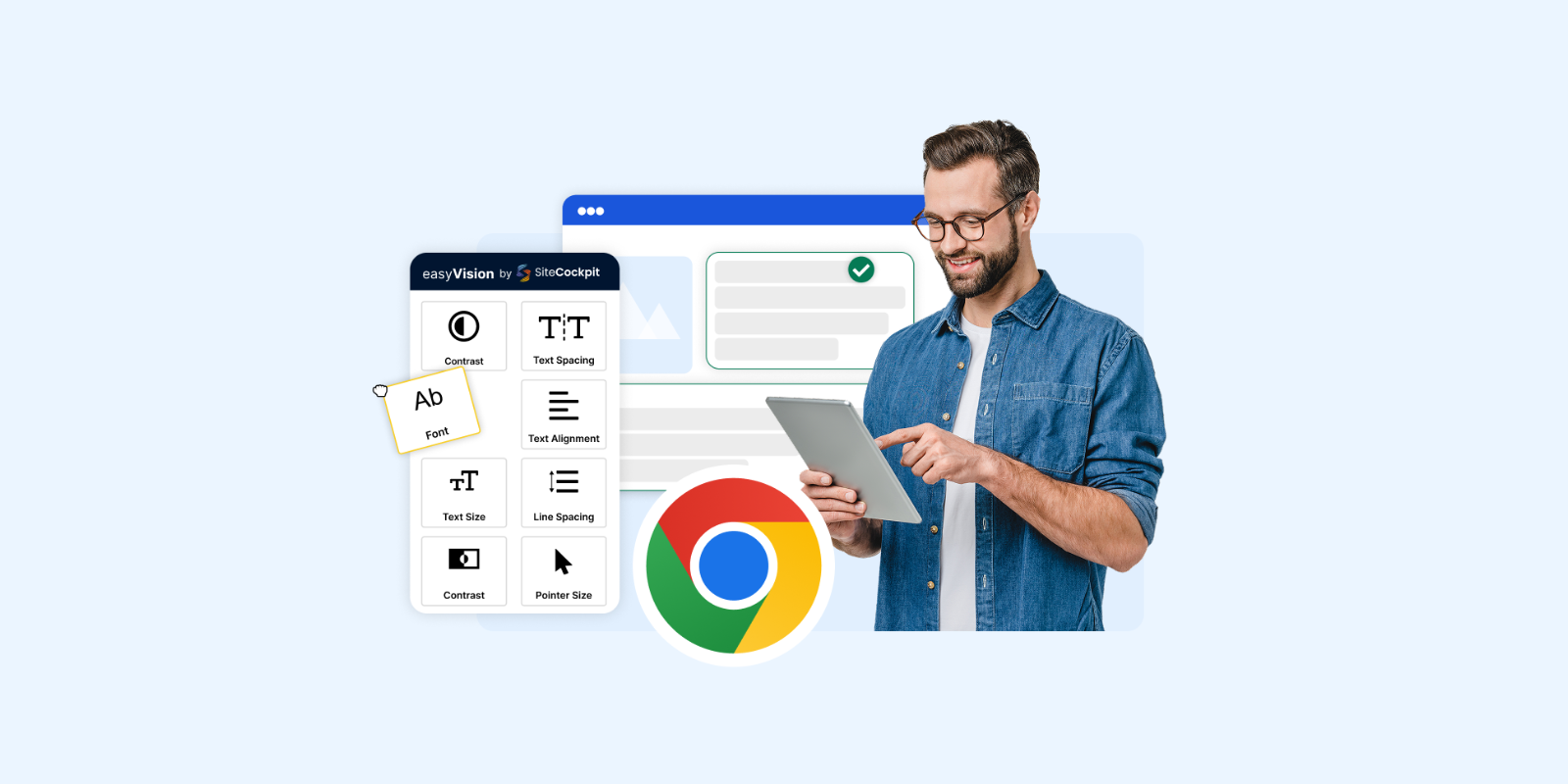
easyVision: Assistance widget for individual display options on the website.
-
easyStatement: Legally compliant declaration on accessibility, editable and up-to-date.
-
Manual audits: In addition to the tools, SiteCockpit checks all points that require human judgment - including integration of users with assistance needs.
Obligation with added value
Digital accessibility is a legal requirement - but it also makes good business sense. Those who invest at an early stage position themselves better, reduce legal risks and increase digital quality overall. SiteCockpit supports companies with clear tools, comprehensible reports and personal support.
Accessibility is not a project. It is part of a sustainable digital strategy.

.png?width=1600&height=800&name=pflicht%20(1).png)

%20(1).png?width=800&height=400&name=easyai%20(2)%20(1).png)